Ao dai rental in Hoi An — the complete guide
How Ao Dai Rental Works in Hoi An
Renting an ao dai in Hoi An is straightforward and built around your hotel. Message us on WhatsApp with your city, dates, and size, and we'll reply in English within the hour to confirm your booking. We handle all the logistics—you just show up at your hotel room ready to get dressed.
Once you've booked, we deliver the ao dai directly to your accommodation in or around the Ancient Town. When the ao dai arrives, you'll have everything you need: a silk ao dai, traditional trousers, and a conical hat. If you've added hair and makeup, our artist will style you on-site. We'll also map out the best route for photos based on the light and your interests, whether that's the lantern-lit streets or the rice fields outside town.
A small refundable deposit (or ID copy) secures your booking and comes back once you return the ao dai undamaged. If you're doing the photoshoot package, a photographer meets you after styling, and you'll spend 90 minutes walking 3–5 handpicked locations. Afterward, your edited photos appear in an online gallery within 48 hours. It's that simple—no studio visit, no stress.
Packages and What's Included
We offer four main rental tiers, each building on the last. The Ao Dai Rental at $25 per day is just the garment: silk ao dai, trousers, and conical hat delivered to your hotel. Perfect if you want to explore Hoi An on your own schedule and find your own photo spots. You get all sizes—women, men, children from age three, and sizes XS–XXL including tall and plus-size options.
Step up to Rental + Hair & Makeup at $65 per person, and a makeup artist comes to your hotel to style your face and hair, making sure you look camera-ready. Everything from the rental is included. This is ideal if you're planning to spend the day photographing yourself or exploring with a travel companion's phone camera.
The Rental + Photoshoot package at $120 per person adds a professional photographer for 90 minutes. They guide you through 3–5 locations with the best light, handle all the composition, and deliver every edited photo within 48 hours to your online gallery. You walk with someone who knows Hoi An's light and angles, removing the guesswork.
Where to Wear Your Ao Dai in Hoi An
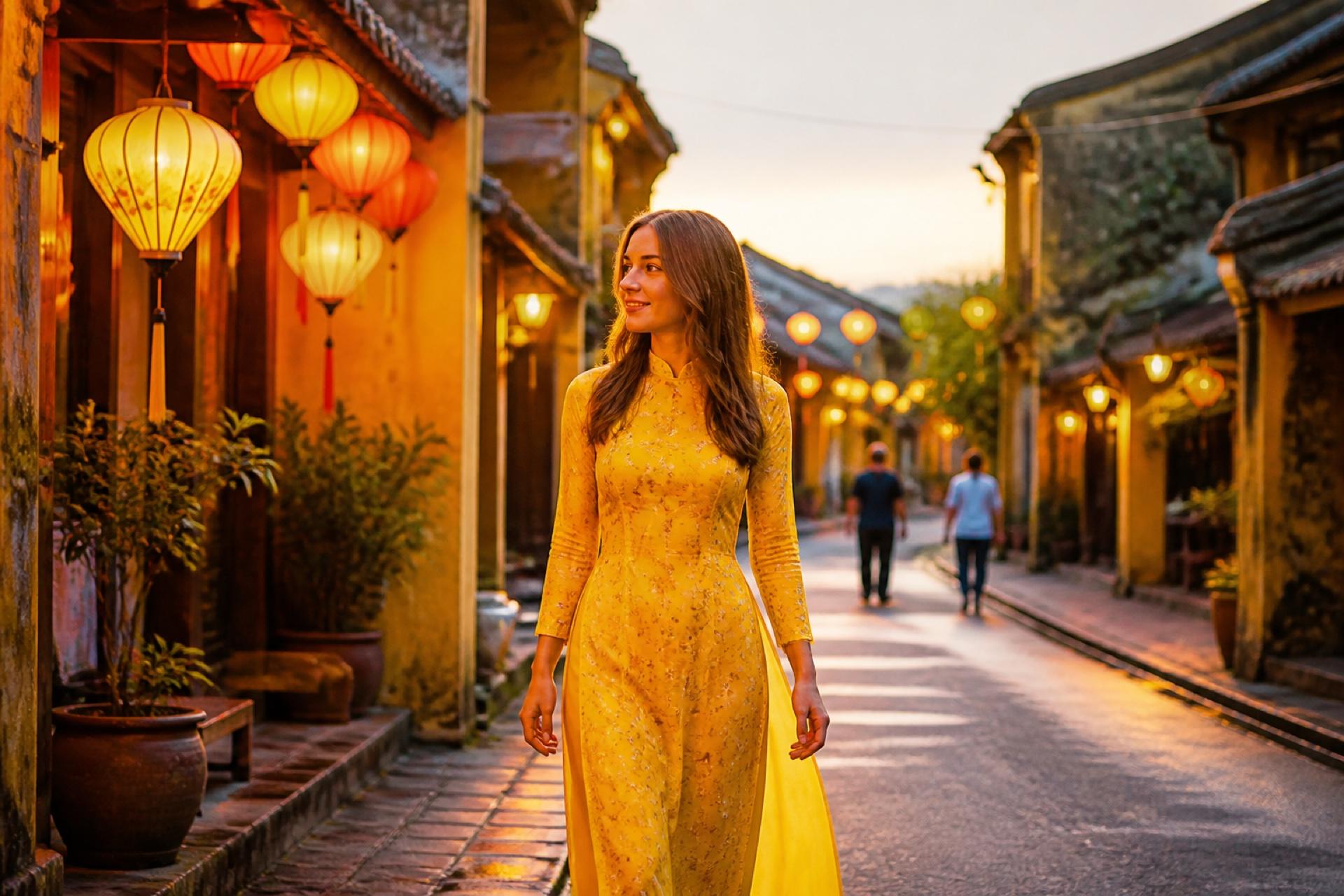
The yellow walls of the Ancient Town are Hoi An's most iconic backdrop. The mustard-colored French colonial facades lining the narrow streets create a warm, timeless frame for any ao dai color. The light is softest in early morning and late afternoon; if you shoot midday, seek shade under shop awnings. Almost every turn offers a new wall, so even a short walk yields dozens of frames.
The Japanese Covered Bridge is postcard-famous for good reason. The arched wooden structure with its red railings contrasts beautifully with silk colors, especially jewel tones and pastels. It gets crowded by mid-morning, so aim for sunrise or the hour before sunset. The bridge is small, so patience with other tourists is part of the experience.
Lantern street at night transforms the town into something magical. After sunset, paper lanterns glow in soft reds, golds, and whites, and the reflected light on the Thu Bon River creates an almost dreamlike setting. The atmosphere is quieter and more intimate than daytime. This works especially well if you've booked a photographer who can adjust to low light.
Just outside town, rice fields by bicycle offer a completely different mood—open, rural, and serene. The green paddies and palm-lined paths feel far from the tourist bustle. The light is gorgeous from mid-afternoon onward. You'll pedal to a quiet spot, change into your ao dai, and shoot against the natural landscape. It's a half-day adventure and worth the ride.
Thu Bon River lantern boats are best experienced in the late afternoon as vendors prepare boats for the evening crowd. The wooden boats, the water, and the reflective quality of late light create cinematic frames. An Bang Beach offers a coastal contrast—sand, water, and blue sky against the ao dai. Tra Que vegetable village shows rural Hoi An with working farmers and green gardens. Cam Thanh coconut forest is moody and atmospheric, with water, tall palms, and dappled light ideal for romantic or artistic shots.
Best Time of Day and Season to Shoot
Light is everything in photography, and Hoi An's light shifts dramatically through the day. Early morning, from sunrise until about 9 a.m., delivers soft, warm, directional light that flatters both skin and fabric. Shadows are long and defined, creating dimension. The Ancient Town is also quieter at this hour, so you'll have more space to move and shoot. If you're doing a self-guided rental without a photographer, this is your golden window.
Mid-morning through early afternoon (9 a.m.–3 p.m.) brings harsh, overhead light that's unflattering for portraits but works for wide landscape shots and detail frames. If you're shooting during these hours, find shade—under shop awnings, inside covered passages, or under trees. The lantern streets and interior spaces of temples become more attractive during this time.
Late afternoon and dusk, from about 4 p.m. until sunset, is the second golden period. The light turns amber and soft, and the town's warmth intensifies. This is when professional photographers often work, and why sunset sessions are popular. Lantern street at night offers its own magic once the paper lanterns light up, usually around 6–7 p.m.
Seasonally, Hoi An is warm year-round, but avoid the monsoon months of September through November when rain is heavy and humidity peaks. December through February is cooler, drier, and has clearer skies—ideal for photography. March through August is warm and generally dry, though May can be humid. If you're traveling outside the dry season, book indoor spots or have flexibility to reschedule if weather turns.
Pricing and Rental Packages in Hoi An
Our pricing is simple and transparent. The basic Ao Dai Rental is $25 per day for the complete outfit—silk ao dai, trousers, and conical hat delivered to your hotel. This works if you want flexibility and plan to shoot yourself or with friends. If you want to add styling, Hair & Makeup is $65 per person and includes professional makeup and hair done at your hotel before you step outside.
The Rental + Photoshoot Package is $120 per person and is our most popular choice. It removes the burden of planning routes or worrying about camera settings—you focus on enjoying the experience.
For couples and families, packages start at $180 and include ao dai for everyone, makeup for women, a full photo session, and gallery. This tier is especially popular for proposals, anniversaries, and multi-generational family memories. A small refundable deposit secures your booking and is returned when you bring the ao dai back undamaged.
Choosing Color and Style for Hoi An's Backdrops
Color choice matters in Hoi An because the town itself is so visually rich. The yellow walls of the Ancient Town work with nearly every ao dai color, but jewel tones—deep blues, emerald greens, burgundy—create the strongest contrast and photograph most vibrantly. Pastels and whites look ethereal against the warm walls and photograph beautifully in soft morning light. If you're drawn to the lantern streets at night, deep colors hold definition under paper lantern glow, while lighter shades glow softly and feel romantic.
For the river and lantern boats, blues and teals echo the water and create cohesion with the setting. Against the Japanese Covered Bridge's red railings, avoid red ao dai; instead choose blues, golds, greens, or whites that complement rather than compete. At the rice fields and vegetable gardens, softer colors and pastels harmonize with the natural greens and earth tones. A coral or peachy ao dai can stand out beautifully, while whites feel serene and minimalist.
An Bang Beach and coastal locations call for lighter, brighter shades that pop against sand and blue sky—pinks, whites, golds, or ocean blues all shine. Darker colors work too if you're aiming for drama or contrast. Cam Thanh coconut forest, being shadier and more atmospheric, suits deeper colors that won't wash out. The light is diffused, so saturation matters more than in bright sun.
Men's ao dai come in the same color palette: traditional whites, blacks, deep blues, and earth tones. White is classic and versatile; darker shades photograph well against Hoi An's colorful walls. Children's ao dai are available in playful and traditional colors—pastels for youngest children, jewel tones for older kids. Don't overthink it: your photographer (if booked) will help you choose based on the locations and light. Our team can also suggest colors when you message to book, based on your dates and the spots you're most excited about.
Temple Etiquette and What to Wear Underneath
Wearing an ao dai to temples and pagodas in Hoi An is respectful and expected. The garment is a symbol of Vietnamese culture and heritage, so locals and monks view it positively. That said, there are practical etiquette rules to follow. You must remove your shoes before entering any sacred space—that's non-negotiable. Wear slip-ons or sandals that you can take off easily; bring them with you or leave them outside the entrance. Some temples have shoe racks; others expect you to leave them at the door.
Underneath the ao dai, wear modest clothing. Avoid anything showing tattoos if possible; if you have visible tattoos, cover them with a light scarf or shawl, especially on arms.
When inside a temple or pagoda, be quiet, move slowly, and never point your feet toward Buddha statues or altars—that's considered disrespectful. If you're taking photos (many temples allow it, some don't), ask permission first. Don't touch statues, incense, or altar objects. If a monk or caretaker tells you to remove a hat or adjust your garment, do so gracefully. The conical hat that comes with ao dai rental should be removed indoors.
At major landmarks like Tan Ky House or the Phung Hung House, the etiquette is less formal than temples, but still respectful. Wear the ao dai with pride—you're honoring the culture. If you're unsure about a specific location, your photographer will know the rules, and our team can advise when you book. The vast majority of tourists who wear ao dai to temples receive warmth and appreciation from locals.
Hotel Delivery and Booking on WhatsApp
We deliver to every hotel and Airbnb in and around Hoi An's Ancient Town area, so you never need to visit a studio or shop. When you message us on WhatsApp or Zalo at +84 338 762 340, tell us your hotel name, your dates, your size (for women: XS–XXL; for men: S–XXL; for children: age or size), and which package interests you. We reply in English within the hour and confirm your booking with a simple deposit or ID copy to secure the rental.
Same-day delivery is often possible if you reach out in the morning. If you're arriving in Hoi An and want to shoot the same day, let us know your expected arrival time and hotel, and we'll arrange collection and delivery around your schedule. Multi-day rentals are flexible—rent for one day, two days, or your entire stay. You return the ao dai after each shoot, or at the end of your rental period if you're doing multiple sessions.
Our booking process is designed to be frictionless. No long phone calls, no confusing email chains, no upfront payment complications. WhatsApp keeps everything clear, visual, and logged. You can share your hotel address, ask questions about locations or colors, and coordinate timing all in one thread. We confirm everything in writing, so there's no miscommunication.
If you're part of a group—friends, a family, or a wedding party—mention that when you book. We can coordinate multiple pickups and drop-offs, ensure all ao dai are ready at once, and brief your photographer on group dynamics. Whether you're solo, with a partner, or with a family of six, we've handled it. Just message +84 338 762 340 on WhatsApp and let's get started.