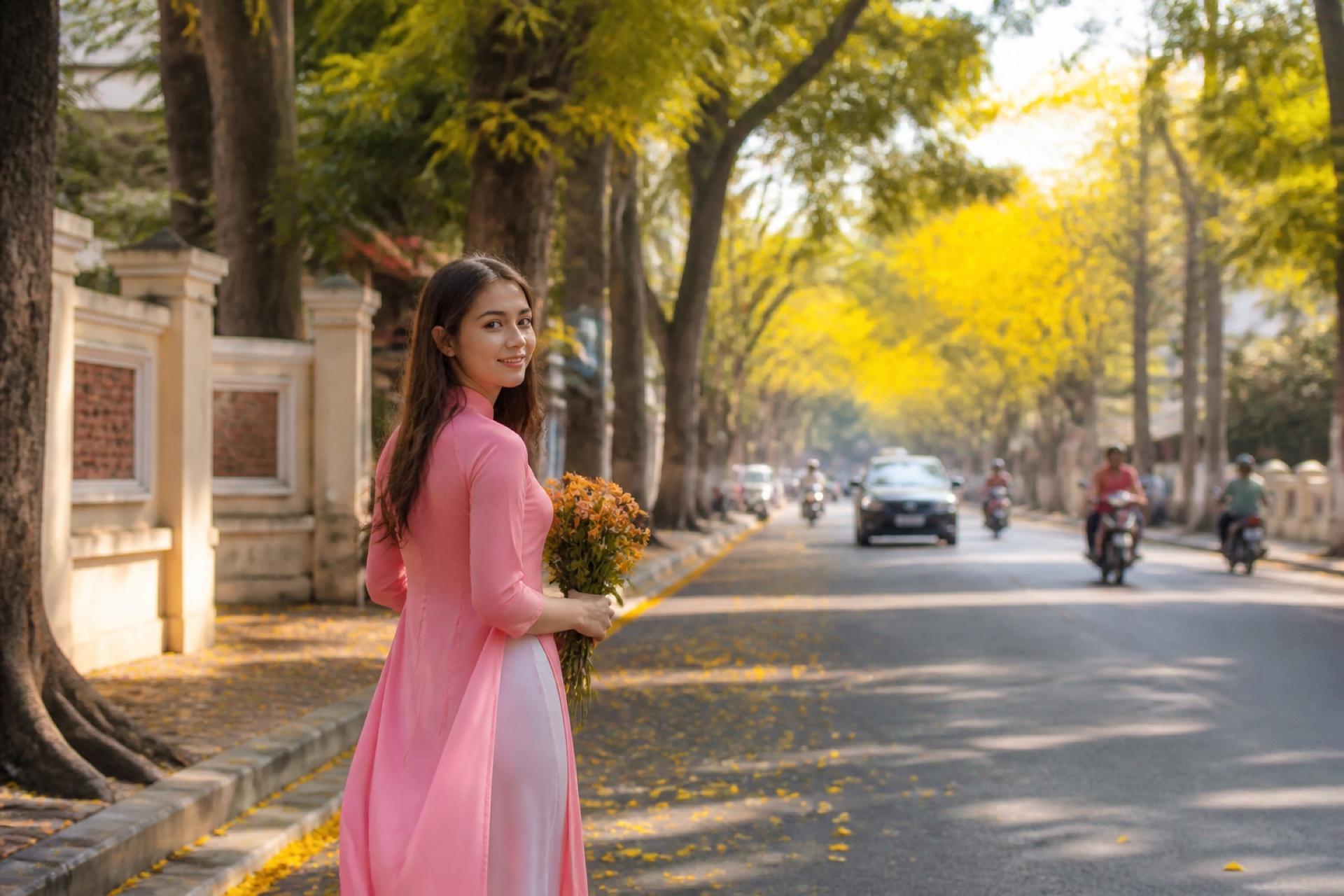
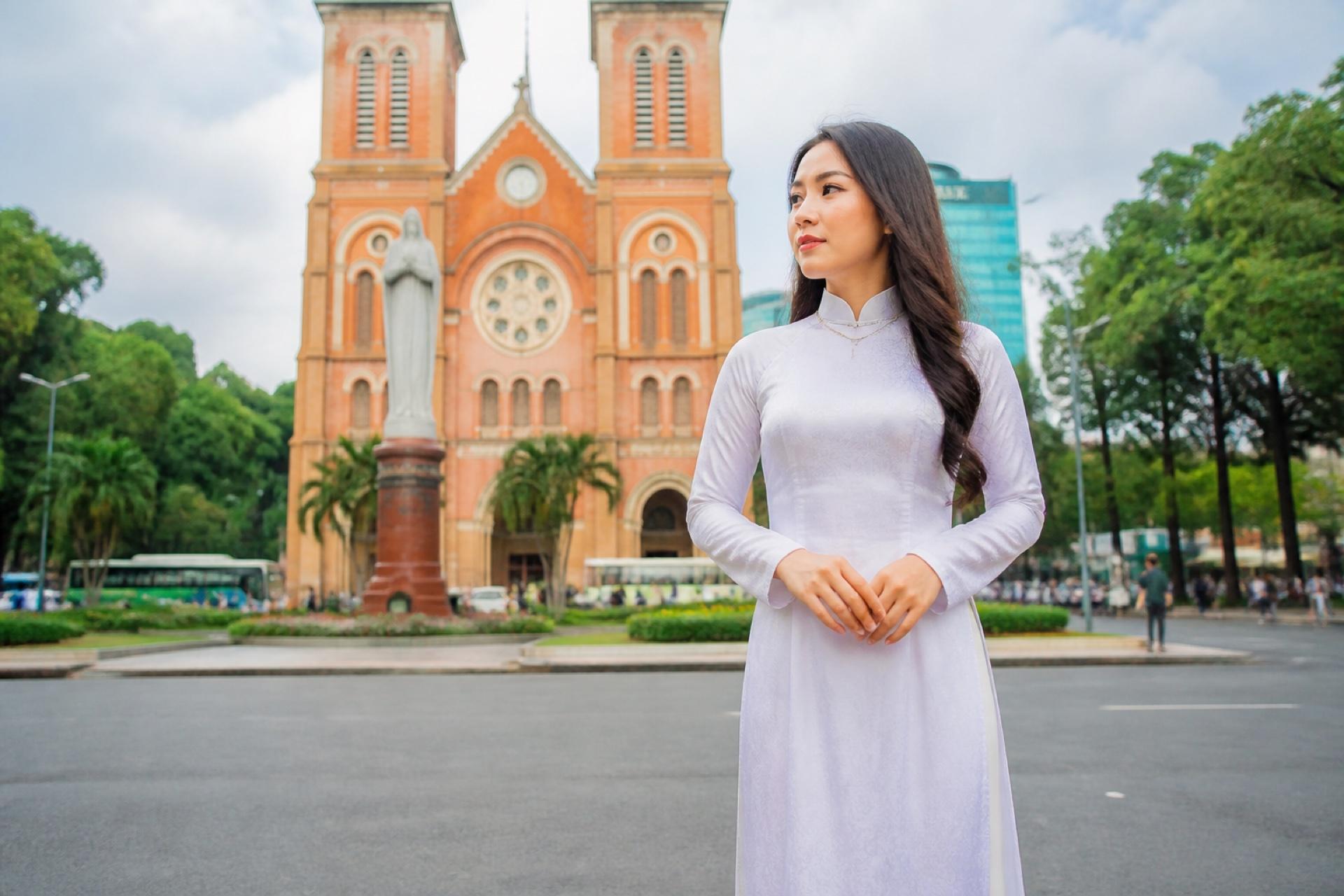
An ao dai requires specific undergarments. The traditional choice is a white long-sleeved áo lót (undershirt) worn beneath the tunic—you'll see this in formal photographs and at ceremonies. For casual daytime wear, a thin white or nude long-sleeved shirt under the tunic is standard; sleeveless or short sleeves look incomplete. Wear high-waisted, seamless underwear in a neutral tone so nothing shows through the silk. The trousers we provide are fitted; wear minimal layers underneath. Many travellers opt for light, breathable fabrics designed for heat, which is wise in Hanoi or Saigon's humidity.
Shoes matter more than many realise. The ao dai's length is designed to skim the ankle, so footwear should be minimal and elegant—flat sandals, simple loafers, delicate flats, or embroidered slippers. Avoid athletic shoes, chunky soles, or anything that competes visually with the tunic. If you're visiting temples, wear shoes that slip off easily, as you'll remove them before entering.
Temple etiquette: the ao dai is inherently respectful, but remove your shoes before entering the inner sanctum, avoid pointing with your feet, and be mindful of people praying. If you're at a wedding or Tet gathering, follow the lead of other guests regarding which rooms are open to photographs. The conical hat can usually stay on outside, but remove it indoors as a sign of respect. Dress codes at ceremonies are unforgiving; if you're unsure of what's expected, ask during your rental consultation.
Finally, the ao dai deserves care. Avoid sitting for long periods on surfaces that might snag the silk, be careful around food and drink, and treat it as you would a borrowed formal garment. When you return it, we inspect for damage and return your deposit. Everyday wear—minor wrinkles, a little dust—is normal and expected.